
Blog · September 11, 2026
How to Price Pool Closing and Opening Services (2026 Rates and Formula)
How to price pool closing and opening services: flat rates for inground and above-ground pools, 2026 price ranges, add-ons like spa winterizing and green pool cleanup, capacity planning, and worked examples.
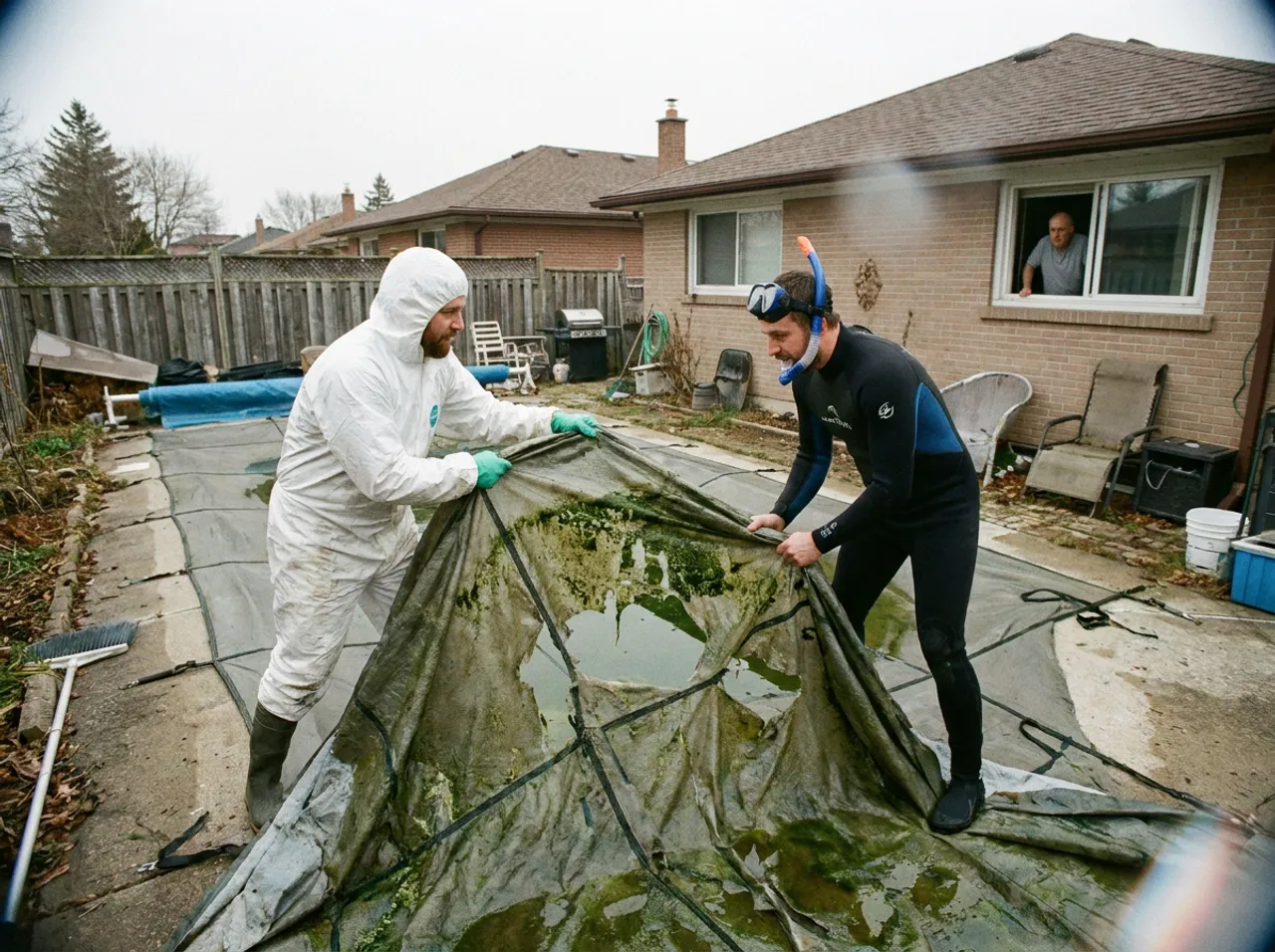
Pool closing and pool opening are priced as flat-rate services, with separate prices for inground and above-ground pools and add-ons priced on top.
Published 2026 figures put professional pool openings at $200 to $500: $175 to $250 for above-ground pools, $250 to $500 for inground pools, and $300 to $500 for concrete and gunite pools (Swim University, updated March 2026). Pool closings are listed at $150 to $450, with $100 to $200 for above-ground and $200 to $450 for inground pools (PoolResearch, based on 2023 data).
Your own flat rate is calculated from your hourly rate, the time each job takes, and your materials. The sections below walk through that calculation.
Why pool openings and closings use flat rates
Openings and closings follow a fixed checklist, so the time per pool is predictable once you have done a few of each type. A flat rate lets a homeowner see the price and book without an inspection, and it lets you schedule a full season of jobs in advance.
Price variation comes from four factors:
- The pool type: above-ground, inground vinyl, fiberglass, or concrete and gunite
- Pool size and depth, which change cleaning time and chemical volume
- Equipment, since heaters, salt systems, automatic cleaners, and attached spas add winterizing or start-up steps
- The cover type: a water-bag solid cover, a mesh or solid safety cover, or an automatic cover
Set a base price for each pool type, then price the other factors as add-ons.
What a pool closing includes
A standard closing, also called winterizing, covers:
- Skimming, brushing, and vacuuming the pool
- Balancing the water chemistry and adding winterizing chemicals
- Lowering the water level below the skimmer and return lines, where the pool type requires it
- Blowing out the plumbing lines and plugging the returns and skimmers
- Draining and winterizing the pump, filter, and heater
- Removing ladders, handrails, and diving board hardware
- Installing the winter cover
List these steps in your service description. A written checklist sets the scope of the flat rate and gives you a record of the work if freeze damage is reported later.
What a pool opening includes
A standard opening covers:
- Removing, cleaning, and storing the winter cover
- Removing plugs and reinstalling ladders, handrails, and fittings
- Reconnecting and starting the pump, filter, and heater
- Raising the water level to the operating line
- Testing and balancing the water, including a shock treatment
- Brushing and vacuuming
A standard opening assumes clear or lightly cloudy water. A pool that opens green is a cleanup job, and it is priced separately.
How to calculate a flat rate
Flat rate = (hours per job × hourly rate) + (materials × markup)
Step 1: Set your hourly rate
Add your costs for the season: labor, vehicle, fuel, insurance, equipment such as a blower and vacuum, and a share of your office and software costs. Divide by your expected billable hours, then add margin. The man-hour rate method in our lawn care pricing guide applies to pool service without changes.
Published labor rates for pool closing work run $50 to $100 per hour (PoolResearch). The examples below use $85 per hour.
Step 2: Time each pool type
Record your time on the first several jobs of each type, from arrival to departure. Add the average drive time between jobs on your route. These examples use:
- Inground closing: 2.5 hours
- Above-ground closing: 1.5 hours
- Inground opening: 2.5 hours
- Above-ground opening: 1.5 hours
Your own times will differ. Replace these with your measured averages.
Step 3: Add materials
Include the chemicals, plugs, and consumables used on a standard job at your cost, then apply a markup of 20% to 30% to cover purchasing, storage, and waste. These examples use a 25% markup.
Worked examples
| Service | Labor | Materials at cost | Materials with 25% markup | Total | Published price |
|---|---|---|---|---|---|
| Inground closing | 2.5 h × $85 = $212.50 | $40 | $50.00 | $262.50 | $265 |
| Above-ground closing | 1.5 h × $85 = $127.50 | $30 | $37.50 | $165.00 | $165 |
| Inground opening | 2.5 h × $85 = $212.50 | $60 | $75.00 | $287.50 | $290 |
| Above-ground opening | 1.5 h × $85 = $127.50 | $40 | $50.00 | $177.50 | $180 |
Each result falls inside the published range for that service. Openings carry higher material costs than closings because start-up requires more chemicals, including a shock treatment.
How to price pool closing and opening add-ons
Price each add-on as a fixed amount, calculated from the extra time and materials it requires. Add-ons that appear in published cost data:
| Add-on | Published range | How to price it |
|---|---|---|
| Hot tub or spa winterizing | $40–$100 | Extra time × hourly rate + antifreeze and plugs |
| Pool equipment winterizing | $50–$100 | Time for heaters, salt cells, and automatic cleaners |
Source: PoolResearch.
Other add-ons to price from your own time and materials:
- Safety cover installation, priced higher than a water-bag cover because of anchor work and cover weight
- Salt system shutdown, which includes removing and cleaning the salt cell
- Heavy debris removal for pools under trees or after storms
- Green pool recovery at opening, billed at your hourly rate plus chemicals, or as a fixed extra visit
- Water delivery when a pool needs filling, billed at the delivery cost plus a handling charge
A green pool can take several visits and a large chemical volume to clear. State in your opening description that the flat rate covers clear or lightly cloudy water, and that algae treatment is billed separately.
Opening and closing packages
Pool companies often sell the opening and closing together as a package priced below the two individual rates. A package secures the spring opening at the time of the fall closing, which fills the next season’s schedule in advance.
Example, using the inground prices above:
- Closing $265 + opening $290 = $555
- Package at 10% off: $500, paid at closing or split between the two visits
Collecting a deposit or saving a card on file at the time of booking confirms the customer’s place on your schedule.
Plan capacity before you publish prices
Closing season runs for a limited number of weeks, and that sets a ceiling on how many jobs you can take.
Capacity = technicians × jobs per day × working days in the season
Example: 1 technician × 3 closings per day × 5 days per week × 6 weeks = 90 closings.
When bookings approach that ceiling, you can raise the price for the remaining slots, add a technician, or close bookings. Tracking bookings against capacity from the first week tells you which of those applies before the season fills.
When pools are opened and closed
Pools are commonly closed when water temperatures stay below 65°F, because algae growth slows at lower temperatures. In northern and midwestern states that typically falls between mid-September and mid-October. Openings run from April through May, timed to warmer weather and Memorial Day.
Customers book closings from late August through September and openings from March onward. Prices published before those windows reach customers at the start of booking.
What to include in a pool service agreement
Put these terms in writing for every opening and closing:
- The checklist of steps included in the flat rate
- The pool type, size, and equipment the price is based on
- Add-ons ordered and their prices
- The water condition the opening price assumes, and the rate for green pool recovery
- Cover condition: who is responsible for a torn or worn cover
- Freeze damage terms, including which equipment the customer must leave accessible for winterizing
- Weather rescheduling terms
- Payment terms, including any deposit and card-on-file authorization
Frequently asked questions
How much should I charge to close an inground pool?
Published figures put inground pool closings at $200 to $450. At an $85 hourly rate, a 2.5-hour inground closing with $40 of materials marked up 25% prices at $265.
How much should I charge to close an above-ground pool?
Above-ground pool closings are listed at $100 to $200. A 1.5-hour closing at $85 per hour, plus $30 of materials marked up 25%, prices at $165.
How much does it cost to open a pool in 2026?
Professional pool openings cost $200 to $500 in 2026: $175 to $250 for above-ground pools, $250 to $500 for inground pools, and $300 to $500 for concrete and gunite pools.
Should I charge more to open a green pool?
Yes. A standard opening price assumes clear or lightly cloudy water. Green pool recovery requires extra chemicals and often more than one visit, so it is billed at an hourly rate plus chemicals, or as a fixed extra visit.
Should I offer an opening and closing package?
A package priced about 10% below the two individual prices books the spring opening at the time of the fall closing. For an inground pool at $265 to close and $290 to open, a package at $500 is 10% off the combined $555.
How many pool closings can one technician do in a season?
At three closings per day, five days per week, over a six-week season, one technician completes about 90 closings. Your own figure depends on job times and the drive time between pools.
Publishing your pool service prices
With a flat rate for each pool type and a price for each add-on, homeowners can see the cost and book without a phone call. Sorvius lists each service (inground closing, above-ground closing, spa winterizing) at your price and lets the customer pick a date and save a card on file. On the Pro plan you can collect a deposit to hold the slot. See pricing or try the demo.