
Blog · September 29, 2026
Snow Removal Contracts: Per-Push vs Per-Event vs Seasonal
Per-push, per-event and seasonal snow contracts compared: who carries the weather risk, what each earns in a light or heavy winter, and the clauses each needs.
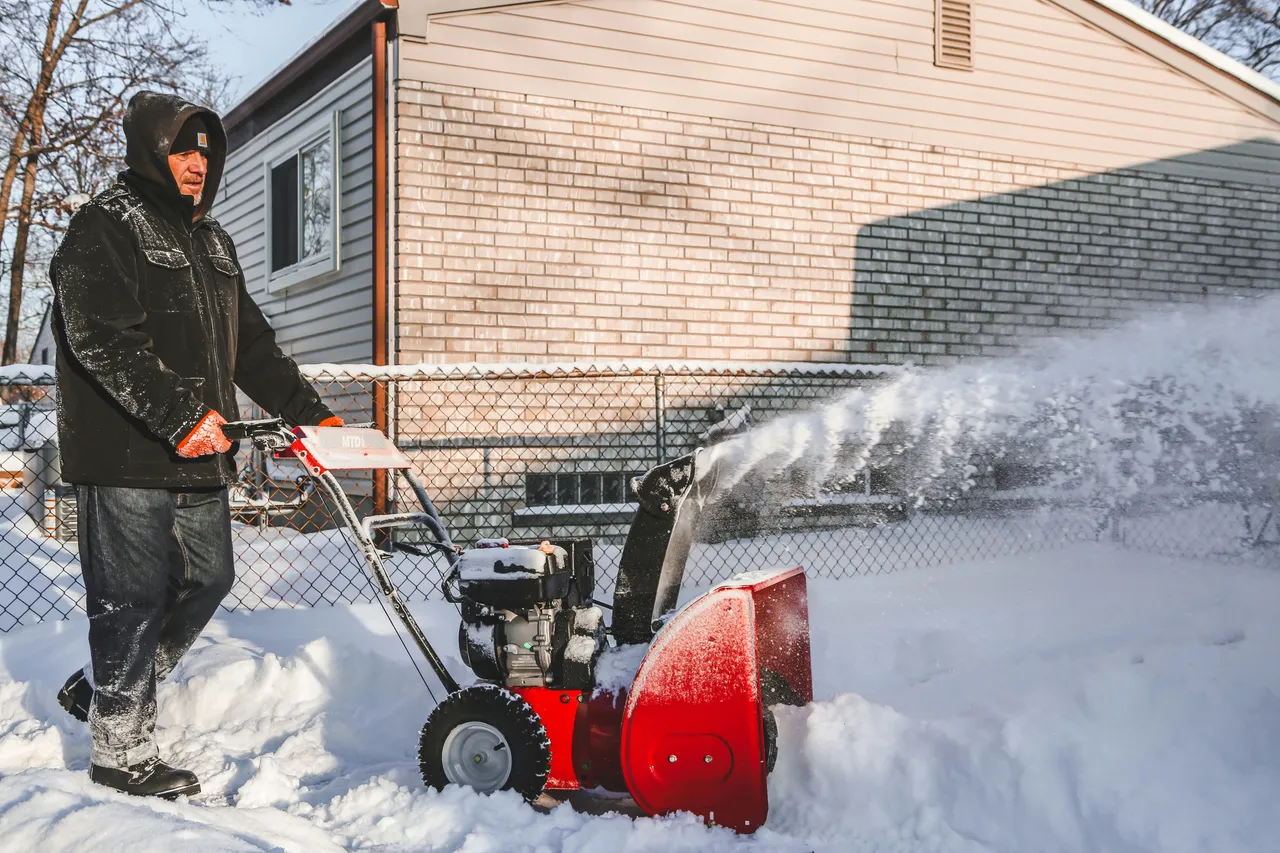
A snow removal contract comes in one of three forms. A per-push contract bills each clearing visit. A per-event contract bills once per storm, however many visits the storm takes. A seasonal contract bills one fixed price for the winter. All three can be profitable, and they differ mainly in who pays for the winter the forecast didn’t predict.
With per-push pricing the customer carries that risk, because a snowy winter means more visits and a bigger bill. With seasonal pricing you carry it, because the price is fixed however many times you plow. Per-event pricing splits it: the customer pays for every storm, and you absorb the storms that need a second or third push.
This guide works through all three with the same driveway and the same three winters, so you can see what each one pays and where each one goes wrong. The rates come from our guide to pricing snow removal, which covers the hourly rate and per-push math in detail.
The example driveway
Every figure below uses one standard 2-car driveway. At a $120 hourly rate, with 20 minutes on site and 10 minutes of travel, it prices at $60 per push, and that price covers snowfall from the 2-inch trigger depth up to 6 inches.
The driveway is priced against three winters:
| Winter | Plowable storms | Storms needing a second push | Total pushes |
|---|---|---|---|
| Light | 6 | 0 | 6 |
| Average | 12 | 2 | 14 |
| Heavy | 20 | 5 | 25 |
The second-push column is the one that’s easy to leave out of a price. A 14-inch storm that keeps falling overnight needs two visits, and those visits have to be paid for somewhere in the contract.
Per-push contracts
A per-push contract charges a set price every time you clear the property. The customer’s bill rises and falls with the snow, and you are paid the same rate for every visit.
For the example driveway, the customer pays $360 in the light winter, $840 in the average winter and $1,500 in the heavy one. Your revenue per push is $60 in all three.
Per-push is the simplest contract to write and the easiest to explain. It suits new customers, properties you haven’t cleared before, and areas where snowfall swings widely from year to year. It has two weaknesses. You have no revenue until it snows, so a light winter leaves your truck, plow and insurance costs uncovered. And customers facing a big bill after a heavy storm sometimes start asking whether the second push was really needed.
A per-push contract should state the trigger depth, the service window (how soon after snowfall stops you arrive), and a depth surcharge. Published 2026 pricing guides list residential plowing at $50–$150 per push, with snow above 6 inches billed higher (InvoiceFly). A common structure adds 50% to 100% for 6–12 inches, which takes the example driveway to $90 at a 50% surcharge.
Per-event contracts
A per-event contract charges once per storm, whether the storm takes one push or three. The customer knows what each snowfall will cost, and you take on the risk that a long storm needs extra visits.
To set the per-event price, divide your expected pushes by your expected storms and multiply by the per-push price. In the average winter the example driveway needs 14 pushes across 12 storms, or about 1.17 pushes per storm, so the per-event price is $60 × 1.17 = $70.
The customer pays $420 in the light winter, $840 in the average winter and $1,400 in the heavy one. Your revenue per push works out to $70 in the light winter, $60 in the average and $56 in the heavy, because the heavy winter’s five second pushes are covered by the flat event price.
Per-event contracts depend on a clear definition of an event, because that definition decides what you are paid. Write down when an event starts (snowfall reaching the trigger depth), when it ends (for example, 24 hours after snow stops falling), and what happens when a storm is unusually large. A common approach is to cap an event at a set depth, such as 12 inches, and bill anything above it as a second event or at a depth surcharge. Without that cap, a 30-inch blizzard costs the customer the same as a 3-inch snowfall.
Seasonal contracts
A seasonal contract charges one price for the whole winter. The customer gets a fixed cost they can budget for, and you get guaranteed revenue whatever the weather does.
The basic calculation is expected pushes × per-push price × a contract discount. For the example driveway, 14 expected pushes × $60 = $840, and a 15% discount brings that to $714, rounded to a seasonal price of $700. That sits at the top of the published $350–$700 range for residential seasonal contracts (InvoiceFly).
Our pricing guide’s seasonal example comes out at about $600 because it assumes one push per storm. Counting the second pushes adds about $100 to the seasonal price for this driveway. If your records show storms that need more than one visit, price the seasonal contract from pushes, not from storms.
Without any protective clauses, the seasonal customer pays $700 in every winter. That works out to about $117 per push in the light winter, $50 per push in the average winter and $28 per push in the heavy one. In the heavy winter, $28 a push is below the roughly $30 it costs to run the truck and operator for a 30-minute stop, before any profit.
The push cap
A push cap limits how many pushes the seasonal price covers. Pushes beyond the cap bill at an overage rate, usually your standard per-push price. For the example driveway, a cap of 18 pushes (about 30% above the 14 you expect) with a $60 overage rate changes the heavy winter from $700 to $700 + 7 × $60 = $1,120. That raises your revenue in the heavy winter to $44.80 per push, which covers your costs with a small margin.
The customer still gets a fixed price in the light and average winters, which is what they signed up for. The cap only applies in a winter well above normal.
The depth clause
A depth clause bills snowfalls above a set depth, such as 12 inches, at a surcharge even under the seasonal price. It protects you from a single storm that takes three times as long as a normal push. Use it alongside the push cap, since a winter can have an average number of storms and still include one very large one.
Seasonal payment terms
Seasonal contracts are usually paid in advance or in two or three installments starting in the fall. Collecting before the snow arrives is part of the appeal for the operator, because it covers equipment and insurance costs before the first push. State the installment dates, and what happens to paid installments if either side ends the contract partway through the winter.
The three contracts side by side
What the customer pays for the example driveway, which is also your revenue:
| Winter | Per push ($60) | Per event ($70) | Seasonal ($700, 18-push cap) |
|---|---|---|---|
| Light (6 pushes) | $360 | $420 | $700 |
| Average (14 pushes) | $840 | $840 | $700 |
| Heavy (25 pushes) | $1,500 | $1,400 | $1,120 |
Your revenue per push under each:
| Winter | Per push | Per event | Seasonal with cap |
|---|---|---|---|
| Light | $60 | $70 | $117 |
| Average | $60 | $60 | $50 |
| Heavy | $60 | $56 | $44.80 |
Per-push pays you the same for every visit and leaves your income to the weather. Seasonal pays you most in a light winter and least in a heavy one, with the push cap setting a floor. Per-event sits between the two.
Mixing contract types on one route
You don’t have to choose one contract for every customer. A route with some seasonal and some per-push customers earns more evenly across different winters than a route on either type alone.
Take two identical driveways, one on the capped seasonal contract and one on per push. In the light winter they bring in $700 + $360 = $1,060 across 12 pushes, or about $88 per push. In the heavy winter they bring in $1,120 + $1,500 = $2,620 across 50 pushes, or $52.40 per push. An all-seasonal route drops to $44.80 per push in the heavy winter, and an all-per-push route earns only $720 from the two driveways in the light winter.
Seasonal customers also give you revenue in the fall, when you’re buying salt and servicing equipment. Per-push customers pay more when you’re working hardest. Offering both lets each customer pick between a predictable price and paying only for what they use.
Choosing a contract type
Per-push suits customers who want to pay only for snow that actually falls, properties you’re clearing for the first time, and winters where you’d rather not carry the risk. It is also the simplest to explain to a customer who has never had a snow contract.
Per-event suits customers who want each storm to cost the same, as long as you have enough storm history to estimate pushes per storm. Its weak point is the event definition, so write that part of the contract carefully.
Seasonal suits customers who want one number for the winter, and it suits you when you want revenue before the first storm. Price it from expected pushes, and include a push cap and a depth clause so a heavy winter can’t erase your margin.
For commercial properties the same logic applies, with salting added. Freeze-thaw cycles can require salt when no snow has fallen, so a commercial contract of any type should say whether salt is included, billed per application, or covered by an allowance.
What every snow contract should include
Whichever type you choose, write these terms down before the season starts:
- The trigger depth that starts service, such as 2 inches
- The service window after snow stops falling
- The areas covered: driveway, apron, walks, steps
- The contract type and price, with any depth surcharge
- The event definition, for per-event contracts
- The push cap and overage rate, for seasonal contracts
- Salting terms
- Property-damage terms, including who marks driveway edges, beds and hidden objects
- The season’s start and end dates
- Payment terms, including installments or card-on-file authorization
Our free snow removal contract template has a fill-in field for each of these. To work out your own per-push, depth and seasonal prices, use the snow removal pricing calculator. This article is general information, not legal advice, so have a lawyer review your contract before you rely on it.
Frequently asked questions
What is the difference between per-push and per-event snow removal?
A per-push contract bills every clearing visit, so a storm that needs two pushes is billed twice. A per-event contract bills once per storm, however many pushes it takes. For the example 2-car driveway, per push is $60 a visit and per event is $70 a storm.
Is a seasonal snow contract better for the customer?
It depends on the winter. In the light winter above, the seasonal customer pays $700 where a per-push customer pays $360. In the heavy winter, the seasonal customer pays $1,120 with a push cap, where a per-push customer pays $1,500. What the seasonal customer gets is a bill they can plan for.
How do I set a push cap for a seasonal contract?
Start from the pushes you expect in an average winter, based on a five-year snowfall average, and set the cap about 25% to 30% above it. Pushes beyond the cap bill at an overage rate, usually your standard per-push price.
How is a per-event price calculated?
Divide the pushes you expect in a winter by the storms you expect, and multiply by your per-push price. With 14 pushes across 12 storms at $60 a push, the per-event price is about $70.
Which snow contract type is most common?
Residential customers are usually offered per-push or seasonal contracts, and commercial properties often add hourly pricing and per-application salting. You can offer more than one type and let each customer choose.
Putting your snow contracts online
Once you’ve settled on your prices, customers still have to find out what they are and sign up. Sorvius turns your snow price bands into a booking page, where customers choose their driveway size, see the price, select per-push or seasonal service, and save a card on file for billing after each storm. See pricing or try the demo.